
Preventative Maintenance Planning for Commercial Buildings in Australia
A Practical Guide to Reducing Risk, Controlling Costs and Extending Asset Life
Most building failures do not occur suddenly. They develop slowly, usually after small maintenance issues are deferred, missed or undocumented.
In commercial property, maintenance is often thought of as a reactive activity: something arranged when equipment stops working. Modern building management operates differently. Regulators, insurers and tenants increasingly expect owners to demonstrate structured maintenance planning, not just repairs.
Preventative maintenance planning is the process of servicing building systems at defined intervals to keep them operating safely, efficiently and predictably. It sits at the centre of operational compliance because many statutory obligations — fire safety, emergency lighting, mechanical ventilation and lifts — depend on ongoing inspection and testing.
The approach is supported by Australian regulatory frameworks including:
- the National Construction Code (NCC)
- Work Health and Safety legislation
- Australian Standards such as AS 1851 (routine servicing of fire protection systems)
National Construction Code — https://ncc.abcb.gov.au
Safe Work Australia — https://www.safeworkaustralia.gov.au/law-and-regulation
A building that relies only on reactive maintenance may still function, but it will usually:
- cost more to operate
- experience more downtime
- carry greater safety risk
- struggle during audits
- depreciate faster
Preventative maintenance planning addresses those risks before they escalate.
Defination: What preventative maintenance actually means
Preventative maintenance is scheduled servicing carried out before failure occurs. The objective is not simply repair it is reliability. It differs from reactive maintenance, where work begins only after a fault appears.
Maintenance Models
Approach |
Description |
|
Reactive maintenance |
Repair after breakdown |
|
Preventative maintenance |
Scheduled servicing |
|
Predictive maintenance |
Condition-based monitoring |
Preventative maintenance remains the standard approach for most commercial buildings because many safety systems must be inspected at fixed intervals regardless of condition.
Examples:
- fire systems must be tested under AS 1851
- emergency lighting under AS 2293
- lifts under state safety regulations
Why Regulators and Insurers Expect It
Work Health and Safety law requires those with control of premises to ensure safety so far as reasonably practicable. In practice, the most defensible way to demonstrate this is through planned inspection and maintenance.
During an incident investigation, regulators do not only ask what failed. They ask whether the owner had a system in place to prevent failure.
Preventative maintenance records often become evidence of due diligence. This expectation also applies to insurers. Insurance risk assessments frequently review:
- servicing schedules
- contractor qualifications
- maintenance documentation
- inspection intervals
Insurance Council of Australia guidance notes that maintenance and risk management affect claims and underwriting decisions.
https://insurancecouncil.com.au
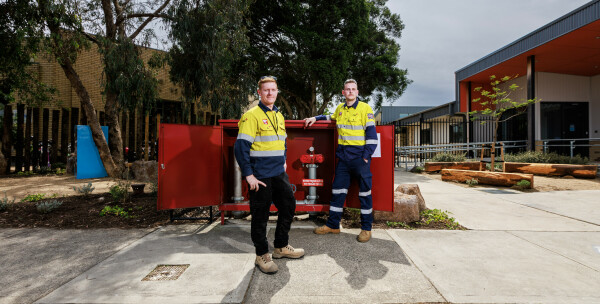
Life-Safety Systems
- fire detection and alarms
- sprinklers and hydrants
- fire doors
- smoke management systems
- emergency and exit lighting
What Systems Require Planned Maintenance
Nearly every building contains systems that must be inspected routinely for safety and operational reasons.
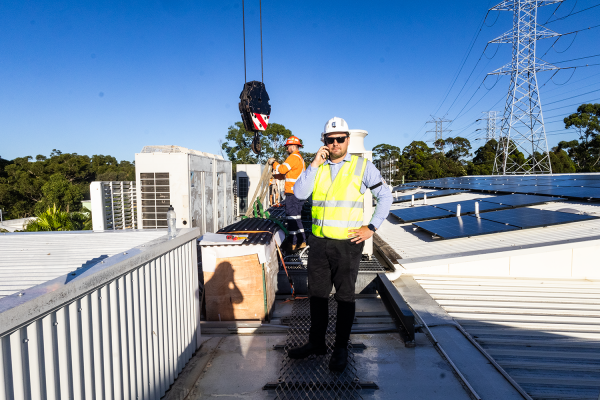
Building Services
- HVAC plant and ventilation
- electrical switchboards
- backup power systems
- lifts and vertical transport
Infrastructure Elements
- roofs and drainage
- pumps and water systems
- access and egress paths
Step-By-Step Planning Process
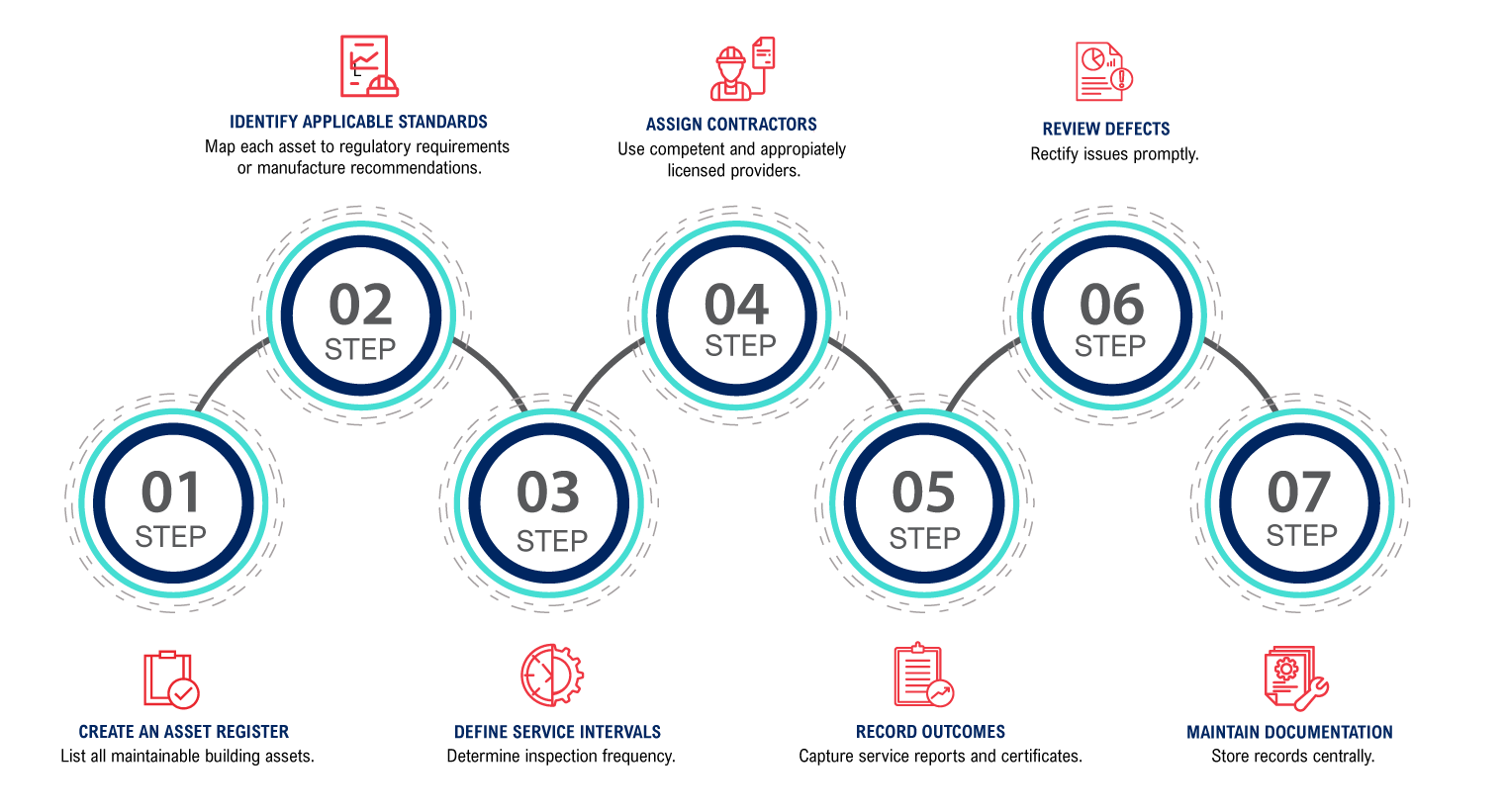
Example Maintenance Structure
|
Element |
Function |
|
Asset register |
identifies what must be maintained |
|
Schedule |
determines when |
|
Contractor |
performs work |
|
Records |
proves compliance |
The Role of Documentation
Maintenance without records provides little operational protection.
In compliance audits, regulators and insurers typically request documentation before inspecting equipment. Records demonstrate that maintenance was planned and completed.
Typical documentation:
- service reports
- inspection checklists
- compliance certificates
- defect rectification records
If maintenance cannot be evidenced, it is often treated as not performed.
Cost Control and Lifecycle Planning
Preventative maintenance is often misunderstood as an additional expense. Operationally, it functions as cost management.
Reactive maintenance tends to create:
- emergency contractor call-outs
- equipment replacement
- business interruption
Planned servicing spreads expenditure and extends asset life.
Lifecycle comparison
|
Reactive approach |
Planned approach |
|
sudden failure |
predictable servicing |
|
higher repair cost |
controlled cost |
|
downtime |
continuity |
|
shortened asset life |
extended life |
Building asset management standards (ISO 55000 series) recognise planned maintenance as a core lifecycle management strategy.
Common Implementation Mistakes
Preventative maintenance plans often fail not because they are incorrect, but because they are incomplete.
Typical issues:
- missing assets
- incorrect service intervals
- fragmented record storage
- unqualified contractors
- unresolved defects
- reliance on calendar reminders instead of systems
A frequent problem is decentralised documentation, reports held across emails, contractor portals and paper folders. From an audit perspective, scattered records are equivalent to missing records.
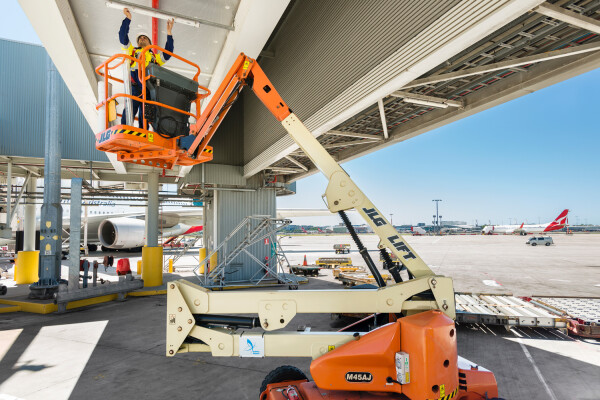
Relationship to compliance and AFSS
Preventative maintenance planning directly supports:
- Annual Fire Safety Statements
- compliance audits
- WHS obligations
Without routine maintenance records, safety certifications often cannot be issued. For many buildings, the maintenance plan effectively becomes the operational backbone of compliance.
Frequently Asked Questions
Specific inspections are required under building and safety regulations. A structured plan is the practical method of meeting those obligations.
Intervals depend on applicable standards and manufacturer recommendations.
It typically reduces unexpected repairs and extends equipment life.
Usually the building owner or facility manager.
Conclusion
Preventative maintenance planning is not simply an operational preference. It is how commercial buildings remain safe, compliant and financially sustainable over time.
Buildings that rely on reactive repairs often encounter higher costs and greater compliance risk. Buildings with structured maintenance programs tend to experience predictable operation and smoother audits.
The principle is straightforward:
plan maintenance → perform inspections → resolve defects → retain records
When consistently followed, this approach supports regulatory compliance, reduces operational disruption and protects the long-term performance of the asset.